CBSE · PARENTS
How to identify learning gaps in a CBSE child
A learning gap hides behind “chapter done”. Check the level your child can hold — Easy, Medium or Hard — on the exact CBSE chapter that feels shaky.
19 September 2026 · 7 min read
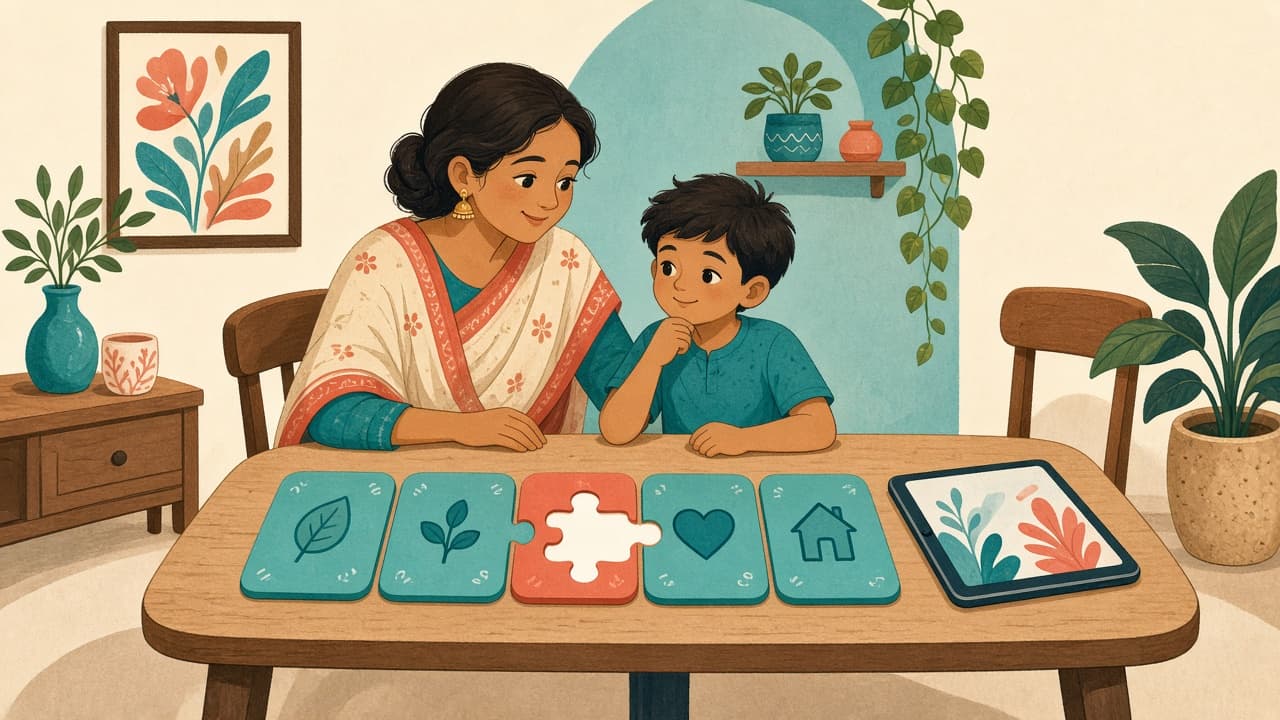
A CBSE learning gap rarely announces itself. The notebook is full. The chapter in the textbook has a tick. Then a unit test arrives and a question from “last month” falls apart. Parents looking for how to identify learning gaps in a CBSE child are usually not missing effort. They are missing a level.
A gap is a chapter — or a level inside a chapter — that your child cannot yet hold without help. “Finished” is about pages. “Holds” is about Easy, Medium and Hard.
Look for the level that drops, not the chapter that was taught
Syllabus plans move on. Understanding does not always follow. The cleanest way to find a gap is to stay on one chapter and ask three questions:
- Can they do the Easy check without you?
- Does Medium still hold when you leave the room?
- Does Hard still look like the same idea, or a different subject?
If Easy is fine and Medium collapses, the gap is not “Maths this year”. It is Medium on that chapter. That is a much kinder, more useful sentence than “they are weak in the subject”.
Ch 5
✓Holds Easy–Medium
Ch 6
✓Holds Easy–Medium
Ch 7
?Hard still shaky
Ch 8
✓Holds Easy–Medium
Why whole-syllabus dumps hide gaps
When a child works a mixed paper — five chapters, one evening — a miss can mean anything: speed, mood, a single word they misread. You cannot tell which chapter leaked. Identifying a learning gap needs a smaller frame: one CBSE chapter, three understanding checks, a result you can point at.
That is why chapter-by-chapter practice matters more than another “complete the term” booklet. Classes 1–10 all have the same shape: the shaky idea is usually last week’s chapter, sitting under this week’s homework.
Signals that a gap is hiding in plain sight
You do not need a lab. You need a few honest tells, then a check to confirm them:
- They can recite the definition but cannot use it in a new sum.
- They ask you to “just start it” on every similar question.
- Homework is neat; the same idea on a slightly harder line is blank.
- They say “we did this” and then treat Hard as a different topic.
Each of those is a hypothesis. The test is still the three-level check on that chapter. Guessing the gap from body language alone is how households end up reprinting the whole book.
PDFs and print packs do not locate the gap
Free PDF sites will happily give you more of the same chapter — or a jumble of chapters. You still mark the page. You still get one score. You still do not know whether the miss was Easy, Medium or Hard. Extra paper can bury a gap under volume.
FREE PDF SITE
You still mark it.
One worksheet. One score. No Easy / Medium / Hard split.
UNDERSTANDING CHECKS
Easy
Medium
Hard
You see the level.
Same chapter, three checks, on the tablet.
Print workbooks, including packs sold as CBSE workbooks on sites such as cbseworkbook.com, are physical practice. They can keep a pencil moving. They do not, by themselves, identify the level your child is comfortable at. If your goal is to find the gap, you need the split — not a thicker stack of pages to store.
False gaps that waste a Sunday
Not every stumble is a learning gap. A child who skipped dinner, who just switched from a noisy video, or who is writing in a language they are still settling into will miss Medium on a good chapter. Identify a gap only when the same level fails twice on the same chapter, on two different days. One bad evening is weather. Two matching misses are a map.
Another false gap: mixing chapters in one sitting and calling the whole subject weak. If Monday was Fractions-Hard and Tuesday was Grammar-Easy, you do not have “they are behind in Class 5”. You have two different cards. Keep the names on the cards. That is the whole method for how to identify learning gaps in a CBSE child without turning the term into a crisis.
Speed is a third impersonator. Some children finish Easy quickly and look “done”. Ask for Medium before you celebrate. A gap that hides under speed is the one that surprises you in the unit test — the paper finally asked for Medium and Hard on the same idea.
A calm way to map one week
Pick at most two chapters that already feel shaky. On the tablet, run Easy, then Medium, then Hard. Write the highest level that stayed comfortable. That list is the gap map. You do not need a colour-coded year plan to start.
BrainyWorkbook is built for that sitting: CBSE chapter practice, Classes 1–10, Easy / Medium / Hard understanding checks, tablet-first in the browser. BrainyBuddy keeps the chapter short so the check does not become another long test. Start free, no card. A full year for one kid is ₹999 per kid per year (₹999/kid/year on the button).
Once you can name the gap — “Hard on Fractions”, “Medium on Nouns” — the next evening has a job. You are no longer hunting through a PDF folder hoping volume will find it for you.
Questions parents ask
What is a CBSE learning gap, in plain words?
A gap is a chapter — or a level inside a chapter — your child cannot yet hold without help. Finishing a worksheet does not close it.
Should I scan the whole syllabus?
Start with the chapter that already feels shaky. BrainyWorkbook is built chapter by chapter for Classes 1–10, so you do not have to work a whole term at once.
Is this the same as downloading extra PDFs?
No. A PDF is more paper. A gap shows up when you see which understanding-check level — Easy, Medium or Hard — your child is comfortable at.
See the level they’re comfortable at
Start free on the tablet · ₹999/kid/year