CBSE · PARENTS
Easy, Medium and Hard CBSE assessment for Class 5
Class 5 is when CBSE chapters start stacking. One assessment paper hides that. Three understanding checks — Easy, Medium and Hard — make the level visible.
19 September 2026 · 7 min read
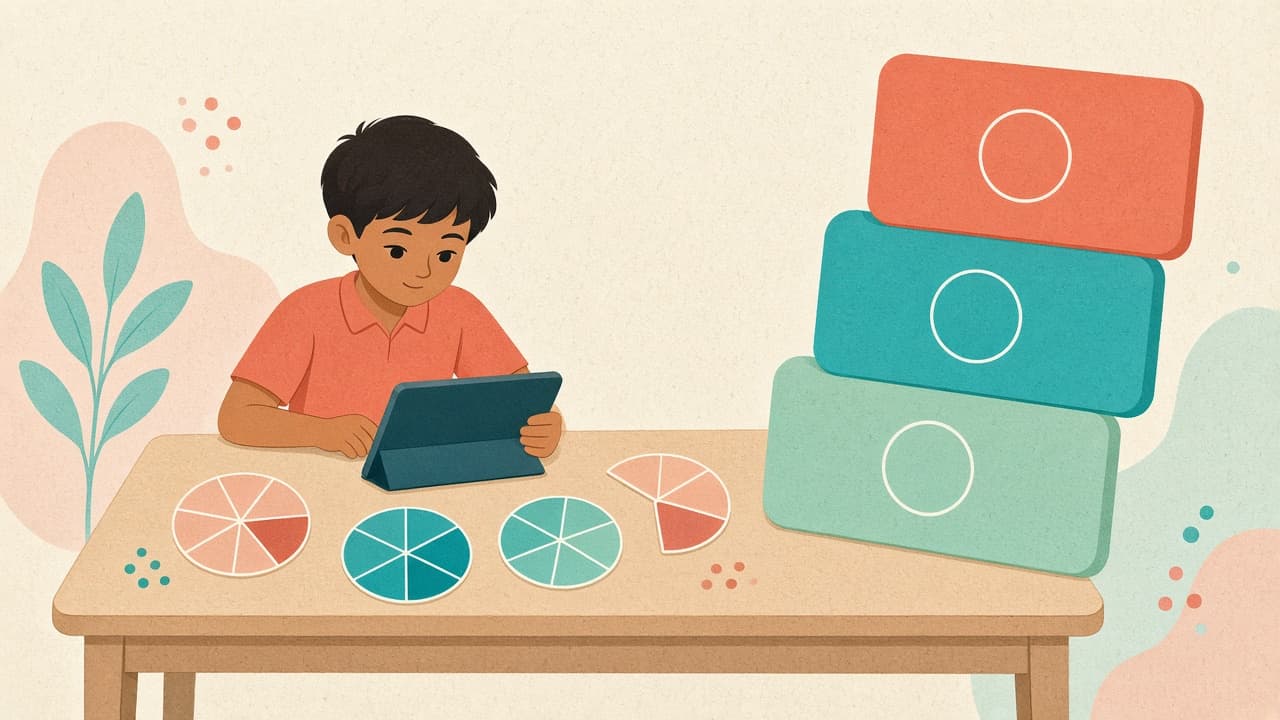
Class 5 is often the year CBSE stops feeling like “one idea a week”. Fractions sit under decimals. Grammar rules stack. Science chapters start to refer to last month. Families then search for an Easy, Medium and Hard CBSE assessment for Class 5 because one unit-test mark no longer explains the evening.
A single assessment paper asks every child the same mix and returns one score. Three understanding checks on the same chapter ask a better question: which level is this child comfortable at?
HARD
The idea still holds when the question is less familiar.
MEDIUM
They can work the chapter without you sitting next to them.
EASY
The basics of this chapter are in place.
Why Class 5 shows the limit of one paper
In earlier classes, a low score often maps to “we have not practised this page”. By Class 5, a mid score can mean Easy is solid, Medium is uneven, and Hard was a surprise. Treating that as one number sends you to the wrong homework — either too much drill, or a jump they are not ready for.
Easy / Medium / Hard CBSE assessment is not a new board exam. It is a way to read one chapter. The board still sets its papers. At home you need a smaller instrument.
Easy
Medium
Hard
THREE LEVELS · ONE CHAPTER
How to run the three checks this week
Pick one Class 5 chapter that is already in the bag or already causing noise — not five. On the tablet:
- Easy first. If this wobbles, stop. The assessment already answered. Stay here.
- Medium next. This is the “can they work without me” line for most Class 5 evenings.
- Hard only if Medium was calm. Hard is the same idea in less familiar clothes — not a trick to rank children.
Write the highest level that held. That sentence is the assessment. Tomorrow you either stay on that level, or you change chapter. You do not owe the week a full mock paper.
Reading the result without panic
Hard-low is not a verdict on the year. It means the chapter is not yet flexible. Medium-low with Easy-high is the most common Class 5 pattern: they “know it” when the sum looks like the textbook, and lose it when the numbers move. That is a Medium job, not a reason to reprint Class 4.
If all three hold, let the chapter rest. Class 5 gets heavy when families keep examining chapters that already stand. Assessment should free the diary, not fill it.
Where Class 5 subjects show the stack
Maths makes the three levels obvious: Easy is the familiar fraction, Medium is a mixed problem, Hard is the same idea when the diagram changes. English hides it: Easy is a rule they can name, Medium is using it in a sentence, Hard is noticing it in a passage that was not written as a grammar drill. Science sits in between — Easy is the definition, Medium is a labelled diagram they have seen, Hard is applying it to a slightly new everyday example.
You do not need a different assessment system per subject. You need the same Easy / Medium / Hard CBSE assessment habit, on the chapter in front of you. Class 5 is simply when parents first feel all three subjects asking for that habit in the same week.
If a sibling is in Class 4 or 6, keep the language identical. “Comfortable at Medium” travels. “68% on the Tuesday paper” does not. That is why BrainyWorkbook uses the same three checks across Classes 1–10 rather than a special Class 5 mode.
Not a PDF test, not a print pack
Downloading “Class 5 worksheets PDF” and marking them is still one paper. You will not see Easy / Medium / Hard unless you invent that split yourself. Print packs — the kind of page bundles sold on workbook sites such as cbseworkbook.com — add physical practice. They do not turn one chapter into three understanding checks on a tablet.
If the keyword you typed was Easy Medium Hard CBSE assessment, the product you want is the split, delivered chapter by chapter, not a thicker Class 5 book.
What BrainyWorkbook offers Class 5 — and the rest of 1–10
BrainyWorkbook runs CBSE chapter practice with Easy, Medium and Hard understanding checks. Class 5 is a natural home for this, and the same three levels run across Classes 1–10 so a sibling in 3 or 7 is not on a different system. Tablet-first, browser, nothing to install. BrainyBuddy keeps each chapter’s practice short.
Start free, no card. One kid for the school year is ₹999 per kid per year (₹999/kid/year). Use it as the Class 5 assessment habit: one chapter, three checks, a level you can trust enough to stop guessing.
Questions parents ask
Is this only for Class 5?
The three-level check is the same idea across CBSE Classes 1–10. Class 5 is simply when many families first feel chapters stacking.
Is Hard meant to scare them?
No. Hard is the third understanding check on the same chapter. It tells you whether the idea still holds when the question is less familiar — not whether your child is “behind”.
Can we start with Easy only?
Yes. Work Easy, then Medium, then Hard on that chapter. Short checks, one level at a time, with BrainyBuddy alongside.
See the level they’re comfortable at
Start free on the tablet · ₹999/kid/year